


When Hurricane Helene tore through the Southeast in the fall of 2024, it tested the networks, infrastructure, and community relationships that outdoor recreation advocates had spent years building to sustain local recreation economies.
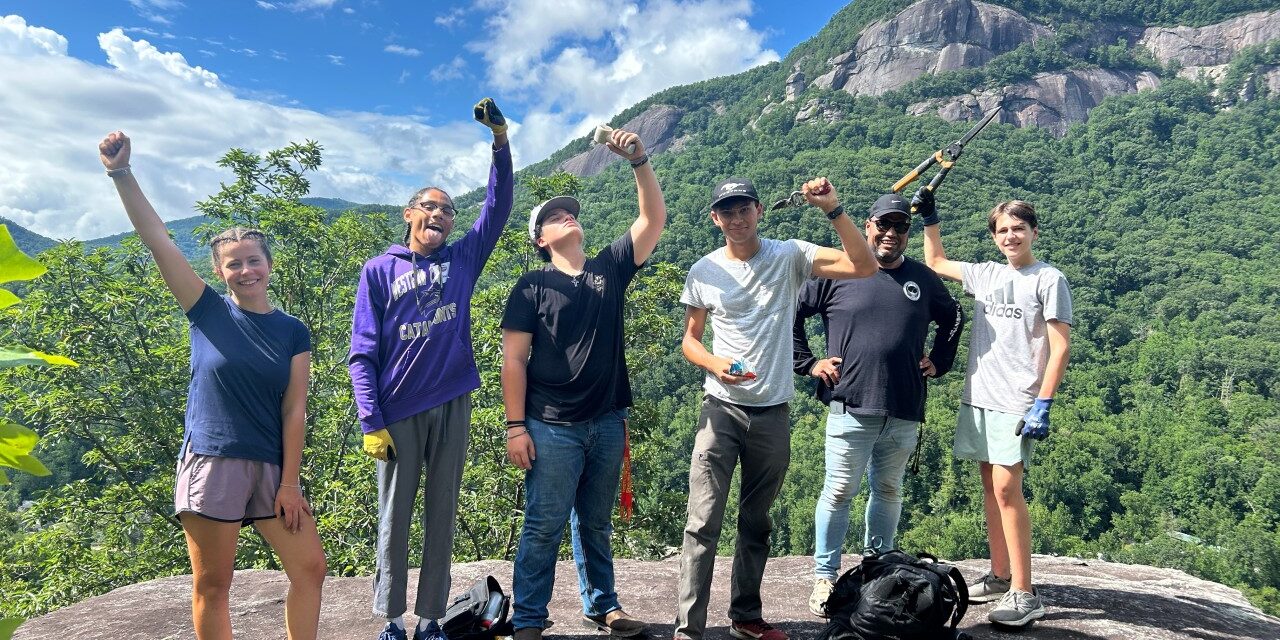
In response, Outdoor Recreation Roundtable awarded Hurricane Helene Recovery and Resilience grants in 2025 to communities across the Southeast to help restore access to the trails, waterways, and recreation infrastructure that anchor their local economies and sustain local livelihoods. Additionally, ORR support was utilized for follow-on engagement in Old Fort, North Carolina, where ORR helped orchestrate a partnership between onXmaps, Inc. , Toyota North America, and Camp Grier to produce a video on their recovery efforts post-Helene as well as a field day for VF Corporation employees with G5 Trail Collective to improve trail infrastructure, working alongside local nonprofits, community leaders, and outdoor advocates, including the Outdoor Foundation, the Morrison Family Foundation, and North Carolina Outdoor Economy Office (one of 25 state offices nationwide that are essential for providing state-level support to recreation communities to build and sustain thriving outdoor recreation economies).
Following a year of diligent work from community leaders and ORR support, this report features practical lessons from grantees for any community — disaster-affected or not — looking to build a resilient, community-rooted outdoor recreation economy. These grants were made possible with support from the Richard King Mellon Foundation and The VF Foundation.

Lesson 1: Invest in Your Networks Before You Need Them
Every grantee noted that having strong recreation relationships already in place prior to Helene was a critical factor in its recovery.

In Ashe County, North Carolina, Keep Ashe Beautiful — a coalition of local community members cultivating a greener, cleaner, and more beautiful Ashe County for present and future generations — used its ORR grant to help mobilize hundreds of volunteers from across the state to clean up miles of debris-choked rivers. They tied the effectiveness of this response to existing relationships between:
- Ashe County government (public sector)
- New River Conservancy (non-profit land/water conservation)
- Trout Unlimited(non-profit land/water conservation)
- Blue Ridge Conservancy(non-profit land/water conservation)
- MountainTrue (non-profit land/water conservation)
- NC Soil and Water Conservation Districts (landowner incentive programs for research protection)
- North Carolina State Parks
- North Carolina Wildlife Federation (non-profit land/water conservation)
Those partners showed up quickly following Helene because they had already been working together and had a shared vision for the role of healthy resources in supporting thriving communities.

Similarly, the Florida Trail Association(FTA) discussed the strength of their coalition when talking about their restoration of nearly 100 miles of the Florida National Scenic Trail along the Suwannee River — including 33 miles cleared during their annual “Suwannee Mowdown” volunteer work party:
“The partnerships that proved most valuable during recovery were not created after the storm; they were built over years of collaboration among nonprofit organizations, public land managers, volunteers, local governments, and community leaders.”

SORBA-CSRA, the mountain biking advocacy organization serving the Central Savannah River Area across Georgia and South Carolina, drew the same lesson from their own recovery work supported by ORR— clearing 13,800 fallen trees and logging over 10,000 volunteer hours across a devastated trail network. “Our organization has succeeded largely because we have acted as the bridge between these groups,” they noted. “Support can come from unexpected places, and new partnerships bring new ideas.”

For communities building a recreation economy from scratch, the takeaway is the same: the time to cultivate relationships with local government, land managers, and allied nonprofits is now, not after a crisis hits.
Lesson 2: Early Funding Acts as a Catalyst, Sustained Funding Enables Resilience

The Carolina Climbers Coalitionused their ORR funding to rehabilitate trail systems leading to three beloved climbing areas — the Village Boulders Trail in Chimney Rock, NC; the Pumpkintown Trail in Pickens, SC; and the Pace Cliffs Trail in Saluda, NC — all of which had been closed since Helene. But beyond restoring access, the grant opened doors. It served as match funding to attract dollars from Pickens County for continued work on the Pumpkintown Trail, and from the Rutherford County Tourism Development Authority for continued work on the Village Boulders Trail.
The Florida Trail Association‘s recurring annual funding from the USDA Forest Servicehas long been a cornerstone of their trail program, enabling them to hire field staff and provide volunteers with training and equipment. That standing investment is what made it possible to respond at scale when Helene hit.
For any community building an outdoor recreation economy, seed investment in trails, access infrastructure, or programming at even a small scale demonstrates community commitment and seriousness to larger funders. This community buy-in is critical to de-risking investments for future funders and instilling confidence in recurring investments.

Lesson 3: Restoring Access Is Only Half the Job — Restore Confidence Too
Reopening a trail or waterway matters. But getting people to actually come back to recreate is a separate challenge — and one that several grantees addressed intentionally.

After the Florida Trail Associationrestored the entire Suwannee Section of the Florida National Scenic Trail to safe, hikeable condition, they hosted Florida Trail FEST in White Springs, a designated Florida Trail Gateway Community. The festival welcomed visitors from across the state to explore local public lands and support local businesses, sending a clear signal that the region was open and ready.
“Recovery is most successful when it includes opportunities for people to return to and reconnect with affected places,” FTA noted. “Restoring recreation infrastructure is important, but restoring public confidence and community pride is equally valuable.”

Camp Grier‘s G5 Trail Collective in Old Fort, North Carolina reached the same conclusion through a different path. When the Curtis Creek Bridge was destroyed, they pivoted quickly to establish the Allison Trailhead as an emergency access point — which allowed the Old Fort Strong Endurance Festival to run in both 2024 and 2025. Those events raised over $3.2 million to rebuild homes destroyed by the storm and kept visitors and participants coming to Old Fort even during the height of the recovery. The original bridge and Gateway Trailhead are now restored and celebrated a ribbon-cutting on June 5th, 2026 — and the local recreation community never went dark in the meantime.
For communities building recreation economies, this points to the underappreciated role of events and programming in economic development. Infrastructure creates the possibility of a recreation economy; events and activation make it real in the minds of visitors, local businesses, and future investors.
Lesson 4: Flexibility Turns Setbacks into Assets
Recovery — like economic development — rarely goes according to plan. The communities that fared best were those willing to adapt creatively when the original path was blocked.

The Florida Trail Association planned to host four dedicated volunteer work parties and instead ran two large-scale events supplemented by numerous smaller ones, adjusting continuously to field conditions, volunteer availability, and ongoing storm impacts. They still achieved their goal of restoring the entire trail segment.
The Carolina Climbers Coalition faced their own mid-project complications when wildfires swept through two of their three project sites, burning through trails that had already been cleared. Rather than treating this as a failure, they continued working and documented it as evidence that recovery requires sustained commitment.
Lesson 5: Prepare for the Long Haul — and Pace Accordingly
Perhaps the most universal lesson from ORR’s Helene grantees is that community recovery and recreation economy-building are marathons, not sprints.

The Ashe County coalition described the challenge of maintaining volunteer momentum after months of intensive weekend cleanups: “Our ‘regular’ local volunteers and leaders were getting worn out.” The Carolina Climbers Coalition noted that roughly 12 months after Helene, a second wave of downed trees appeared — likely a delayed consequence of the storm’s soil disturbance — requiring another round of clearing. The Florida Trail Association described vegetation rapidly re-encroaching on newly opened trail corridors and previously maintained sections falling into unusually difficult condition after multiple seasons of reduced maintenance.
Sustainable momentum looks different in different recreation destinations. In Ashe County, it meant transitioning from large mobilization events to a smaller-scale, ongoing operation now led by a full-time cleanup coordinator at the New River Conservancy — a role that exists in part because of the coalition’s work. In SORBA-CSRA’s case, it meant scaling back chainsaw work during the summer heat to protect volunteers and planning for a multi-season timeline to complete the final miles of trail reclamation.
For communities building recreation economies, the same principle holds: durable impact requires building systems, not just completing projects. That means developing standing relationships, investing in organizations that can carry the work forward, and setting realistic expectations for how long meaningful change actually takes.