


Outdoor Recreation Roundtable calls on Congress to pass the bipartisan America the Beautiful Act to strengthen the $1.3 trillion industry, support American jobs and drive future growth
WASHINGTON, D.C. — The U.S. Department of Commerce’s Bureau of Economic Analysis (BEA) today released new annual economic data showing that America’s outdoor recreation economy remains a powerful and resilient contributor to the nation’s economy, even as growth has leveled off amid broader economic uncertainty.
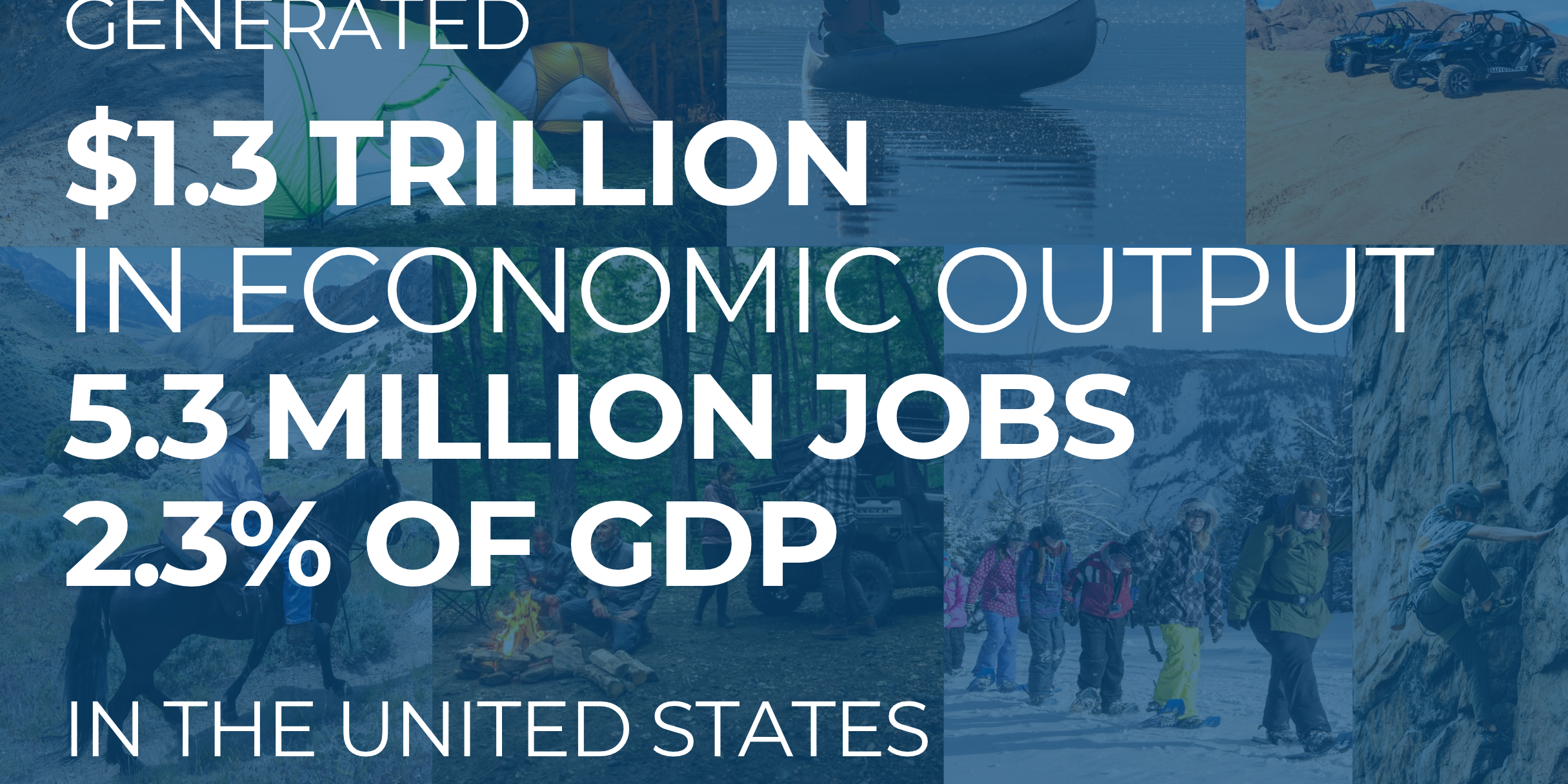
According to the new BEA Outdoor Recreation Economic Statistics, outdoor recreation generated $1.3 trillion in gross economic output in 2025, supported 5.3 million American jobs and accounted for 2.3% of U.S. GDP. The data reflects an industry that continues to demonstrate strength and stability, but also underscores the need for policies that expand access, modernize aging recreation infrastructure and create opportunities for future growth.
Outdoor Recreation Roundtable (ORR), representing more than 110,000 outdoor recreation businesses, said the new numbers reinforce an urgent message for Congress: America’s outdoor recreation economy is a major economic asset, and sustained investments in the public lands and waters that support it are essential to its continued success.
Statement from Whitney Potter Schwartz, Interim President of Outdoor Recreation Roundtable (ORR):
“The new data reinforces what outdoor recreation businesses and communities across the country already know: our industry is strong, resilient and an essential part of the American economy. But holding steady isn’t enough. We have an opportunity to build on this foundation, create more jobs and strengthen local economies, and that starts with investing in the public lands, waters and infrastructure that make outdoor recreation possible and the experiences a lifestyle.” said Whitney Potter Schwartz, Interim President, Outdoor Recreation Roundtable.
Key 2025 Data Highlights
- $1.3 Trillion in Economic Output
- 5.3 Million Jobs (3.3% of U.S. Employment)
- 2.3% of U.S. GDP
- 1.9% Growth in Real Outdoor Recreation Value Added
State-Level Impact
Outdoor recreation continues to contribute significantly to state and local economies, supporting jobs, small businesses and economic opportunity in communities across the country.
- The top five states in year-over-year growth were Nevada (6.8%), Florida (5.2%), Massachusetts (4.9%), New York (4.8%), and Rhode Island (4.7%) highlighting the industry’s broad geographic reach and economic importance.
- States with the largest outdoor recreation economies included California, Florida, Texas, New York, and Illinois.
- State Offices of Outdoor Recreation, now established in 25 states, continue to help translate outdoor recreation participation into local economic development, infrastructure improvements, workforce opportunities and small-business growth.
What Do the Numbers Mean for the Industry?
This year’s data tells the story of an industry that remains fundamentally strong but faces challenges to unlocking its full economic potential.
- The outdoor recreation economy remains resilient. Despite economic uncertainty, inflationary pressures, shifting trade policy, threats to public lands and waters, reduced staffing and changing consumer spending patterns, outdoor recreation continues to be a significant contributor to the national economy.
- Demand for outdoor experiences remains strong. Americans continue to embrace outdoor recreation for their physical and mental well-being to improve their health and lower the cost of their health care. This creates opportunities for communities and businesses that can meet that demand.
- Access and infrastructure are critical to future growth. Aging campgrounds, trails, marinas, roads and other recreation facilities can constrain opportunities for businesses and visitors alike.
- Small businesses are especially dependent on reliable access. Outfitters, guides, retailers, campground operators, manufacturers and other outdoor businesses rely on well-maintained public lands and waters to support jobs and local economies.
- Long-term investment and business certainty matter. Sustained funding, predictable policies, modernized infrastructure, and technical assistance can help communities urban and rural turn outdoor recreation demand into lasting economic benefits.
- The industry needs a workforce to match its growth. Outdoor recreation supports 5.3 million jobs, from guides and park staff to manufacturers and retailers. Filling those jobs depends on training pathways that keep pace with the industry.
Looking Ahead: Congress Must Pass the America the Beautiful Act
With the outdoor recreation economy holding steady, ORR is urging Congress to act on one of the most important opportunities to strengthen the industry’s future: passage of the bipartisan America the Beautiful Act.
The legislation would reauthorize and strengthen the National Parks and Public Land Legacy Restoration Fund, originally established through the Great American Outdoors Act of 2020. It would help address the growing maintenance backlog on America’s public lands and waters while improving visitor infrastructure, encouraging public-private partnerships and prioritizing recreation projects including trails, campgrounds, marinas and access for hunting and fishing.
Earlier this year, more than 200 outdoor recreation businesses and trade associations representing every corner of the industry called on congressional leaders to pass the legislation, emphasizing that investments in public lands and waters are essential to the success of America’s outdoor recreation businesses and rural communities.
The economic case is compelling. Recreation on federal lands and waters alone generates approximately $351 million in economic activity every day, based on a 2025 analysis ORR commissioned.
With strong bipartisan support for the legislation, ORR is urging Congress to make passage of the America the Beautiful Act a priority before the end of the year.
Potter Schwartz continued, “Congress has an opportunity, during the last few weeks of this session, to help unlock the next chapter of growth by passing the bipartisan America the Beautiful Act. More than 200 outdoor businesses and associations have already made the case that modern campgrounds, accessible trails, improved facilities and well-maintained public lands are not luxuries — they are economic necessities. America celebrating its 250th anniversary is the perfect time to make this investment in our future and ensure these places continue to support American businesses, jobs, and communities for generations to come.”
Additional Policy Priorities
Beyond passage of the America the Beautiful Act, ORR and its members continue to urge policymakers to:
- Fully implement the bipartisan EXPLORE Act to expand access, improve recreation experiences and encourage innovation and public-private partnerships.
- Guarantee quality access and conservation of public lands and waters for the sustainable future of the recreation industry.
- Fully fund the Recreational Trails Program to support diverse trail users and strengthen rural economies.
- Reduce regulatory barriers and provide greater certainty for outdoor recreation businesses.
- Strengthen federal-state coordination, including creating and supporting State Offices of Outdoor Recreation, to advance outdoor recreation economic development.
- Recognize outdoor recreation as part of the nation’s health strategy, focused on connection and resilience, at a time when chronic disease, health care costs, disconnection, and mental health issues are rising.
- Preserve and expand access to America’s public lands and waters as a long-term investment in the nation’s economy.
- Pursue trade policies that account for the outdoor industry’s supply chains and give businesses the predictability they need to plan, invest and hire.
- Invest in training pathways for outdoor recreation careers, as outlined in the Outdoor Workforce Policy Priorities from the National Outdoor Recreation Workforce Consortium.
Background
The U.S. Department of Commerce’s Bureau of Economic Analysis (BEA) releases statistics measuring the outdoor recreation economy for the nation, all 50 states, and the District of Columbia. This is the ninth consecutive year that the BEA has released government data on the outdoor recreation economy. Prior to 2017, the federal government did not measure the economic impact of outdoor recreation. The bipartisan Outdoor Recreation Jobs and Economic Impact Act (Public Law No: 114-249) was signed into law in 2016, which required the federal government to measure the sector’s impact on the economy to help inform policy makers and business leaders about the number of jobs created and consumer spending driven by outdoor recreation industries. The law also requires that the Commerce Department submit a comprehensive analysis to Congress capturing the outdoor recreation sector’s contribution to the economy. This annual data is vital to showing how the outdoor recreation industry has a significant impact on the national economy and job creation and contributes to the health and vitality of the nation.